Media depiction of Flu shot technique
David Naismith (retired physician), Vernon BC, January 15, 2019.
On January 11th I was so disturbed by the portrayal of health professionals on TV, both in adverts and on the National, that I fired off an email to some colleagues. As usual, I learnt something as the thread progressed, so here is a distillate of that exchange.
In 1967-ish, when home on vacation from Medical school, I was helping out my father, who had injured his arm. An anaesthetist working as a GP in post WW2 Scotland before anaesthetics were moved from the intern to a fully trained specialist. He introduced me to the skill of a "good" injection.
Burnout and Resilience
Vancouver BC - Oct 19, 2011.
 A talk on burnout in doctors at a recent conference in Vancouver provided good information and stimulated further exploration.
During questions the speaker said the prevalence of burnout in doctors is 20 percent and tends to occur in pockets or clusters.
The talk focused on burnout resulting from lack of recognition while caring for others. Although burnout can also result from lack of recognition from colleagues and co-workers, lack of resources, and degree of bureaucracy.
US launches new MyPlate icon as reminder for healthier food choices
 On June 2, 2011 US First Lady Michelle Obama and Department of Agriculture Secretary Tom Vilsack unveiled the federal government's new food icon, MyPlate. MyPlate is a new generation icon with the intent to prompt consumers to make healthier food choices and to seek more information by going to www.ChooseMyPlate.gov
“This is a quick, simple reminder for all of us to be more mindful of the foods that we’re eating,” said First Lady Michelle Obama. “It’s tough to be a nutritionist, too. But we do have time to take a look at our plates. As long as they’re half full of fruits and vegetables, and paired with lean proteins, whole grains and low-fat dairy, we’re golden. That’s how easy it is.”
Health issues for adults born with cerebral palsy
 What happens to children born with cerebral palsy when they become adults?
In one case an individual born with cerebral palsy when they were an adult in their early 30’s had progressive deterioration of function involving their affected upper limb.
The individual was reviewed by their orthopedic surgeon who suggested botox injections for spasms and possibly some cosmetic improvement to the upper extremity although not optimistic for functional improvement.
The case was also reviewed with a neurologist who suggested neurological consultation with EMG studies and MRI studies, if needed, focused on any findings suggesting disc herniation, plexus lesion or other impingement.
Nutrients in Our Food
 If you ever find yourself wondering what nutrients are in different foods you might want to take a look at the US Department of Agriculture (USDA) Nutrient database.
It provides a wealth of information on over 7,500 specific food items and details of the nutrients they contain down to the many different minerals, vitamins, types of fats, carbohydrates, proteins and various amino acids.
There are two very useful ways to look at this information on their website.
Clinical examination of the shoulder
 The following links were provided by Cameron Bennett, Musculoskeletal Physiotherapist, who recently did a presentation on "Clinical Examination of the Shoulder" at St. Paul's Hospital GP Department CME Rounds.
Cameron Bennett's sole practice is shoulder and associated spinal rehabilitation. More information can be found on his website at http://www.activeshoulder.com
Acute Shoulder Injuries
http://www.aafp.org/afp/2004/1115/p1947.html
Examination of the Shoulder
Part 1, http://www.aafp.org/afp/20000515/3079.html
Part 2, http://www.aafp.org/afp/20000601/3291.html
Video, http://www.medicalrounds.com/rounds/wcb_20081229_shoulder_exam/
Diagnostic and Therapeutic Injection of the Shoulder Region
http://www.aafp.org/afp/2003/0315/p1271.html
"Examination of the Shoulder - The Complete Guide" McFarland, GE (2006)
Mistakes were made (but not by me): Cognitive dissonance
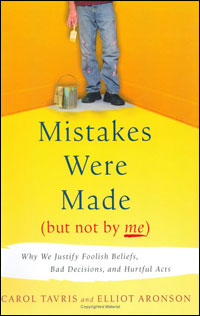 Mistakes were made (but not by me): Why we justify foolish beliefs, bad decisions, and hurtful acts... a book co-authored by Elliot Aronson.
Psychiatrists specialize in the ails of individuals. Social psychologists specialize in the ails of groups. The eminent social psychologist Elliot Aronson was interviewed in a CBC audio "podcast" available from the following site:
http://podcast.cbc.ca/mp3/ideas_20080428_5430.mp3
It is an interesting program from the CBC radio “Ideas” on the subject of cognitive dissonance. It offers some insight into how people can so badly misinterpret things to fit their preconceived notions and prejudices and become incapable of accepting any other view.